


Career Overview
Switching from a non-tech background to a technology career is a practical and rewarding opportunity in India. The right approach is to identify a tech role that matches your experience and interests, and then focus on developing the skills needed for that role.
Rather than choosing a course first, begin by understanding which technology career is right for you and what skills it requires. Your existing experience and transferable skills can give you a strong advantage when combined with relevant technology skills and practical knowledge.
Quick facts
- Career Level: Entry-level to experienced professionals
- Education: Depends on the selected tech role
- Key Skills: Technical, analytical, communication and problem-solving skills
- Learning Time: A focused 3–6 month plan can help build interview readiness
- Opportunities: Startups, agencies, product teams and technology-driven companies
- Suitable For: Non-tech professionals and career switchers
Required Skills
- Technical Skills – Learn the tools and concepts actually used in your target tech role.
- Analytical Skills – Understand data, requirements and business problems clearly.
- Communication – Explain your ideas, projects and previous experience to employers and teams.
- Problem Solving – Find practical solutions to technical and business problems.
- Portfolio Building – Create atleast two practical projects that prove what you can do.
- Consistent Learning – Follow a focused three month learning plan and stay regular.
How It Works
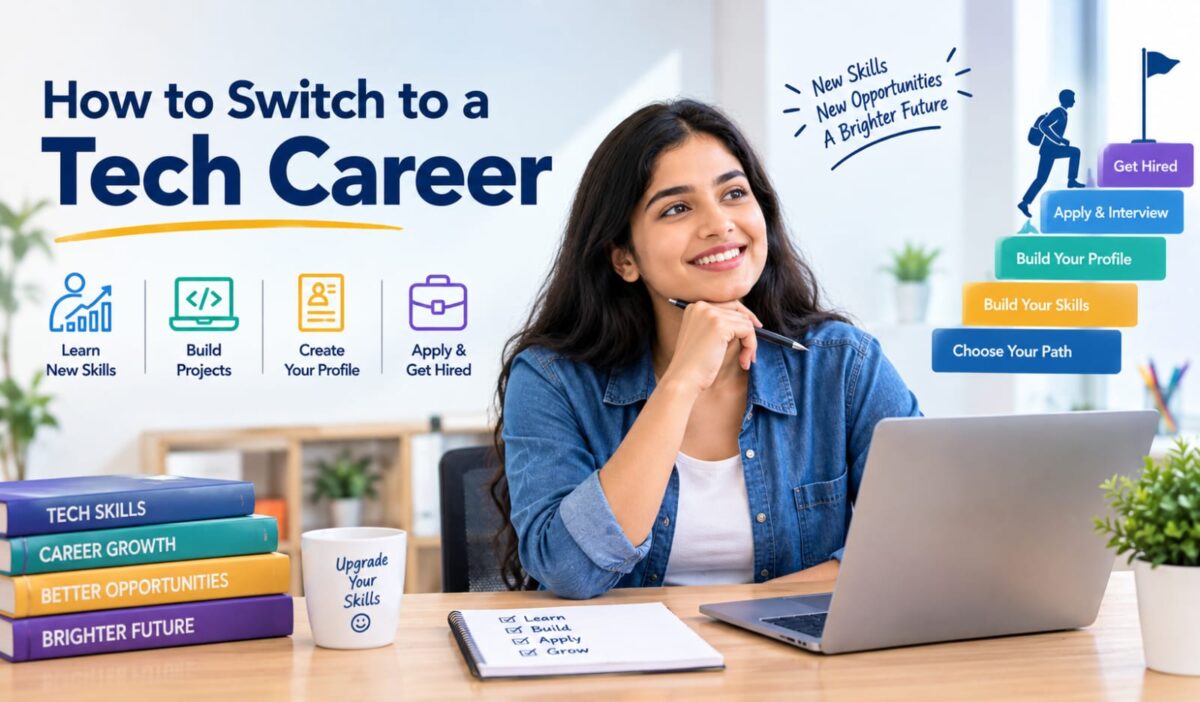
A step-by-step route into a tech career. Each stage builds on the last.
Select Your Career Step 1
- Identify tech roles that match your background, interests and strengths
- Compare job roles, required skills and coding level
- Choose one focused career path
Build Your Skills Step 2
- Review real job listings for your target role
- Choose one project-based learning track and complete it
- Follow a realistic 3–6 month learning plan
Create Your Profile Step 3
- Register as a candidate on CareerShakti
- Add your education, skills, projects and experience
- Get your ATS-friendly CV prepared
Apply and Interviews Step 4
- Apply for internships and junior roles that match your profile
- Tailor every application to the job description
- Prepare for role-specific interviews and get selected
Job Roles & Titles
This career opens the door to a range of roles as you grow and specialise:
| Career Path | Example Roles |
|---|---|
| Data & Analytics | Data Analyst, Business Analyst, Data Engineer |
| Web Development | Web Developer, Frontend Developer, WordPress Developer |
| Web & UI Design | Web Designer, UI Designer, UX Designer |
| Software Development | Software Developer, Backend Developer, Full-Stack Developer |
| Digital Marketing | SEO Specialist, Digital Marketing Executive, Performance Marketer |
| Social Media & Content | Social Media Executive, Content Strategist, Content Creator |
| Product & Growth | Product Manager, Product Analyst, Growth Executive |
| Cybersecurity | Cybersecurity Analyst, SOC Analyst, GRC Analyst |
| Cloud & IT Operations | Cloud Support Associate, Cloud Administrator, IT Operations |
| Quality Assurance | QA Tester, Software Tester, Quality Analyst |
| Technical Support | Technical Support Executive, IT Support Specialist, Application Support |
| Business & Technology | Business Analyst, IT Business Analyst, Technology Consultant |
| AI & Automation | AI Automation Specialist, AI Operations Associate, Prompt Specialist |
| CRM & Business Systems | CRM Specialist, Salesforce Administrator, Business Systems Analyst |
| Project & Delivery | Project Coordinator, IT Project Coordinator, Scrum Master |
| Technical Content | Technical Writer, Documentation Specialist, Content Operations |
Industry Demand
Technology skills are used across many industries, so a career switch does not necessarily mean leaving your previous industry completely. Candidates can combine technology skills with their existing domain knowledge to explore roles in finance, healthcare, marketing, sales, operations, e-commerce and business services.
Where Tech Opportunities Are Available
- Startups
- Software companies
- Digital agencies
- Growing product teams
- Technology-driven businesses
- E-commerce companies
- Finance and fintech-related organisations
- Healthcare technology companies
- Marketing and analytics teams
Candidates should focus on organisations and roles where their existing experience can be combined with their newly developed technology skills.
Future Scope
Technology is constantly evolving, creating opportunities in software development, data analytics, AI, cybersecurity, cloud computing, UX/UI design and other digital fields. By upgrading their skills and combining them with existing experience, professionals can explore new career opportunities and successfully transition into technology roles.